Snow Day Calculator: The Ultimate Guide to Predicting a Day Off
The sky turns a heavy grey, the first snowflakes begin to drift down, and a universal question sparks in the minds of students everywhere, could this be it?
The hope for a snow day an unexpected holiday gifted by winter weather is a timeless thrill. In our modern age, that hope is powered by a unique tool: the snow day calculator.
But can you really trust this digital crystal ball? What magic does it use to make its predictions? This guide will pull back the curtain, exploring what snow day calculators are, how their digital gears turn, and just How Accurate is a Snow Day Calculators? when the snow starts to fall.
What is a Snow Day Calculator?
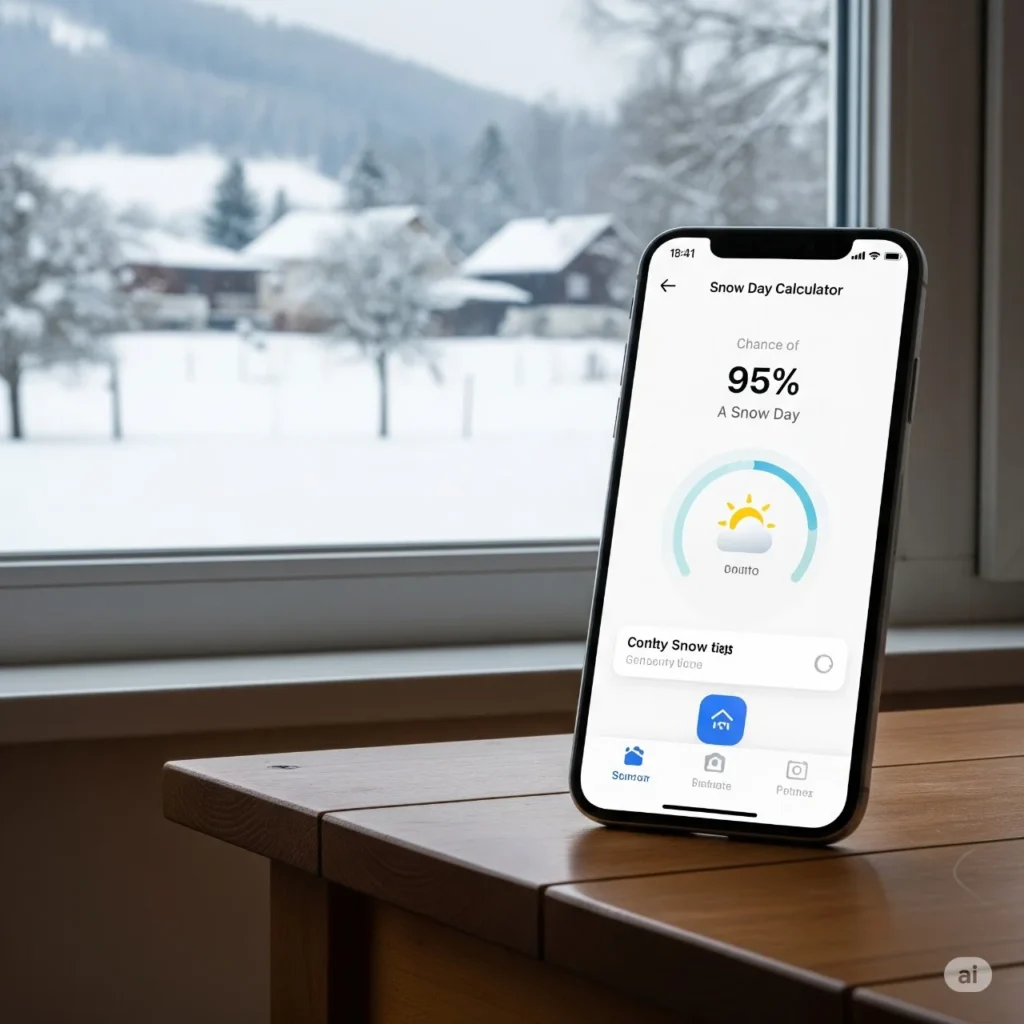
Think of a snow day calculator as a specialized weather detective. It’s an online tool that gathers clues about an incoming winter storm and, based on the evidence, calculates the probability of your school declaring a day off.
You provide it with your location (usually a zip code) and sometimes the type of school you attend, and it delivers a percentage—your official “snow day chance.”
These calculators turn the anxious wait for an official call into an interactive, data-driven experience.
How Does a Snow Day Calculator Actually Work?
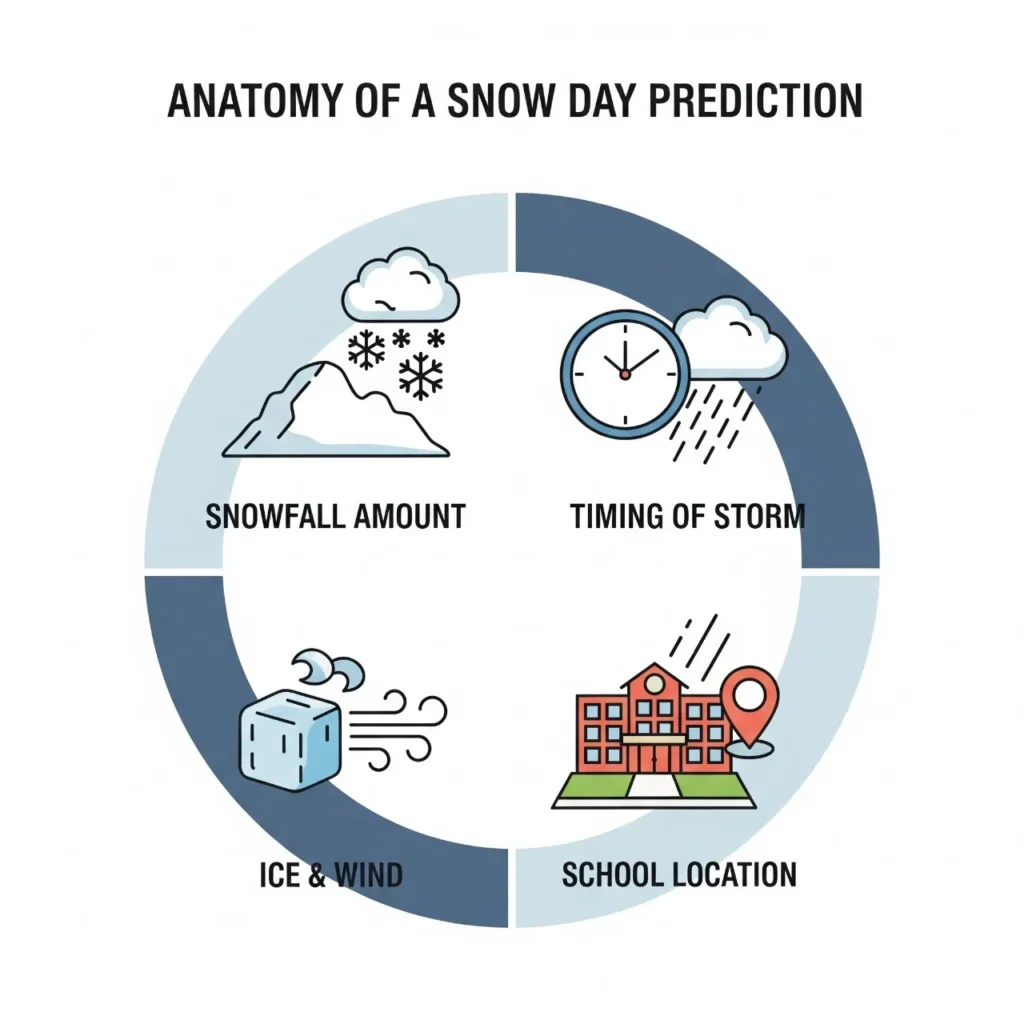
The secret behind any snow day calculator is its algorithm—a complex set of rules that processes multiple variables simultaneously. It’s not just looking at the number of inches in the forecast; it’s weighing a variety of critical factors to make an educated guess.
1. The Core Weather Intelligence The calculator’s brain is powered by a constant feed of meteorological data from advanced weather models. It meticulously analyzes:
- Snowfall Totals: The predicted amount of snow is the foundational data point.
- The Crucial Timing: Five inches of snow at 10 p.m. is manageable. Five inches at 6 a.m. during the peak of the morning commute? That’s a potential deal-breaker. The calculator heavily weighs when the storm will hit.
- Precipitation Type: Ice is the true villain of winter weather. The algorithm understands that a thin layer of freezing rain or sleet can be far more dangerous than a foot of fluffy powder, and it adjusts its predictions accordingly.
- Wind Chill and Temperature: It’s not always about what falls from the sky. Dangerously low temperatures or extreme wind chills that make waiting for a school bus unsafe can trigger a closure on their own.
For the most precise weather data, these tools often pull from reputable sources.
2. The Local Context An algorithm that works for Miami won’t work for Minneapolis. Sophisticated calculators understand this and factor in:
- Your Zip Code: This tells the calculator about your region’s climate and its general preparedness for winter weather. A city accustomed to heavy snow has a much higher tolerance than a city where snow is a rare event.
- Historical Data: The best calculators learn from the past. They analyze how often your local school districts have closed for similar storms, refining their predictions over time.
How Accurate is a Snow Day Calculator? The Verdict
So, here’s the bottom line: a snow day calculator is an excellent and often surprisingly accurate forecaster, but it is not an official announcement. You should treat it as a highly informed guide, not as a guarantee.
The final call for a snow day is a nuanced, human decision made by your school’s superintendent. This decision involves last-minute variables that no algorithm can perfectly account for, such as:
- On-the-Ground Conditions: The superintendent is in contact with road crews and may even drive the bus routes themselves in the pre-dawn hours to see how safe they are.
- Operational Readiness: Are the school parking lots and walkways cleared? Is the heating system in every building working correctly?
- The Human Factor: Ultimately, a person has to weigh the immense responsibility of student and staff safety against the disruption to education.
A calculator might show a 95% probability, but if the storm shifts or road crews work a miracle, you might still have school.
Getting the Most Out of Your Prediction
To use a snow day calculator effectively, pair its prediction with other sources:
- Check Official Channels First: Your school district’s website, official social media pages, and automated phone/text systems are the sources of truth.
- Tune into Local News: Your local meteorologists provide context and updates that a simple percentage can’t offer.
- Use It for Fun: Enjoy the excitement! Part of the fun of a potential snow day is the anticipation. Use the calculator to track the storm and hope for the best, but always has your backpack ready just in case.
Final Verdict
In the end, snow day calculators are a fascinating blend of data science and wishful thinking. They provide a remarkably insightful look into your chances for a day of building snowmen and drinking hot chocolate.
Also, our snow day prediction calculator collects weather data from the US official weather forecasting site to ensure accuracy in results. So, if you are wondering if it is going to be off tomorrow, try it out by clicking here, and see whether it is a snow day or not. Do not forget to share your experience in the comments section below.